
Old Town Charm in Southeast Asia

Southeast Asia attracts travellers from all over the world, and it’s easy to see why. The region is a treasure trove of delicious cuisines, exquisite sights and thrilling activities, ready to be explored at affordable prices.
For culture lovers, Southeast Asia is also home to captivating old towns that, even today, preserve their rich heritage, standing in contrast to huge, modern cities such as Bangkok and Kuala Lumpur.
Southeast Asian cities with well-preserved old towns offer a window into the centuries of trade and cultural exchange that have shaped the region, and enable visitors to truly experience history.
Cities like Hoi An, Luang Prabang and Chiang Mai reflect a melange of Buddhism and mercantile heritage, while George Town, Yogyakarta and Battambang showcase the interplay of a colonial past with a myriad of cultural influences. Visiting one of these cities is like travelling back in time.
Best of all, for visitors based in Singapore, travelling within Southeast Asia is quick, easy and affordable. Simply book your flight, buy travel insurance, pack your bags and you’re ready to go.
Here are our favourite Southeast Asian destinations that have retained the charm of the past.
Hoi An, Vietnam
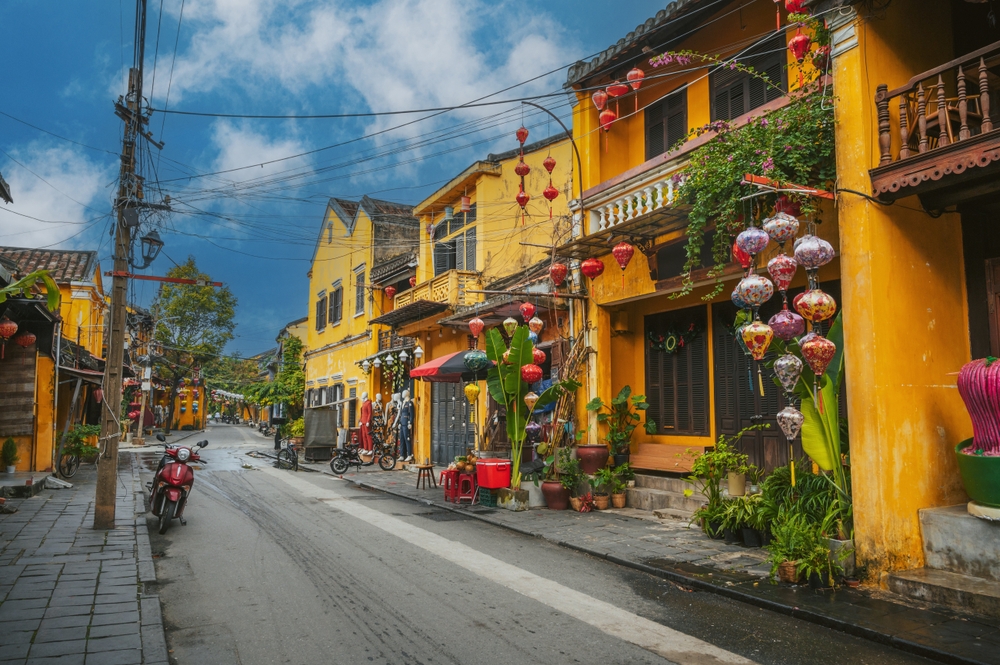
Hoi An’s Ancient Town, located in central Vietnam, is a UNESCO World Heritage site and home to ornate architecture dating back to the 15th to 19th centuries, when the city served as a trading port along the Thu Bon River.
Due to its status as a busy trading hub, Hoi An became a melting pot of influences, serving as a crucible for cultural exchange in the region. Its eclectic architecture is a testament to the city’s multicultural past.
Although Hoi An fell out of favour as a trading port after the 19th century, it survived wars, unrest and modernisation unscathed, and its wooden buildings and original street plan have been remarkably well preserved.
Hoi An is walkable and best explored on foot, enabling visitors to conveniently duck into the city’s many temples, assembly halls and heritage houses displaying Chinese, Japanese and some colonial influences. The relentless traffic in other parts of Vietnam is absent in the Ancient Town, which is mostly closed to motor vehicles.
Must-sees include the Japanese Bridge, a bridge with an integrated temple built by Japanese merchants, and Tan Ky Old House, a well-preserved merchant’s house that offers a glimpse into the life of a 19th-century business owner.
Luang Prabang, Laos
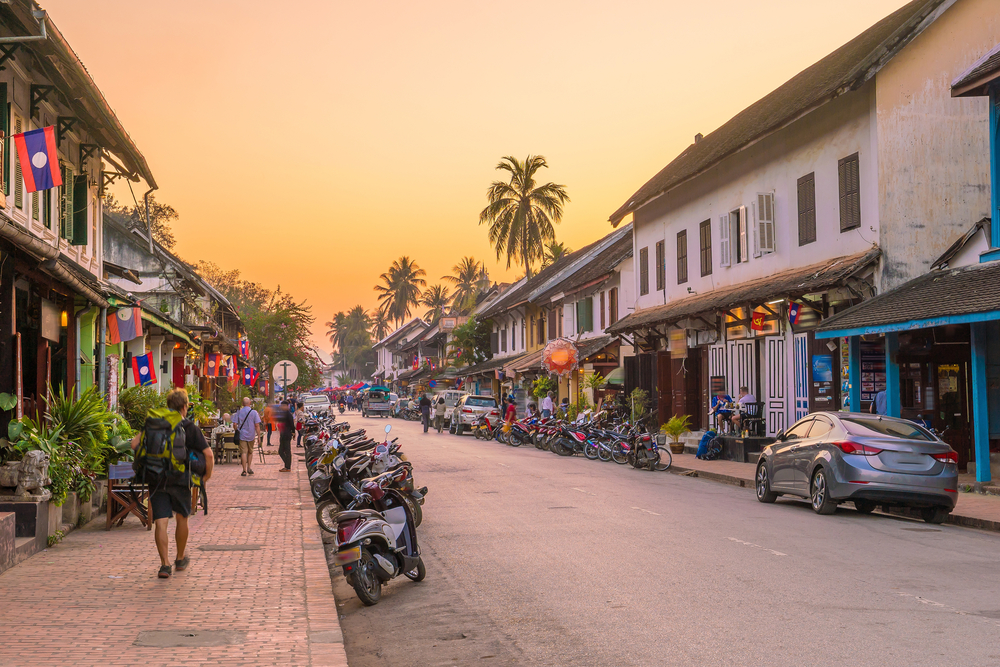
Luang Prabang, Laos’s most well-known historical town and a UNESCO World Heritage site, exudes tranquillity. Intricate Lao temples offering glimpses of saffron-robed monks stand alongside traditional wooden riverside houses and stately French colonial villas.
Temples are plentiful in Luang Prabang despite the city’s small size. That comes as no surprise, as it was once Laos’s spiritual heart and a regional centre for Buddhism. Standout temples include Wat Xiengthong, one of the city’s biggest and the coronation site of Lao kings, and Wat Manorom, with its colourful murals depicting the life of the Buddha.
Even today, Theravada Buddhism is deeply embedded in the fabric of life in Luang Prabang, with the alms-giving ritual still practised daily by monks and locals at dawn.
For sunset views over the Mekong River and the shining rooftops littering the city, a hike up Phousi Mountain, crowned with the Buddha Footprint Temple, is a must. The hike offers stunning views of the lush jungle landscape surrounding Luang Prabang. This coexistence with nature could be one of the keys to Luang Prabang’s atmosphere of calm and simplicity.
Chiang Mai, Thailand
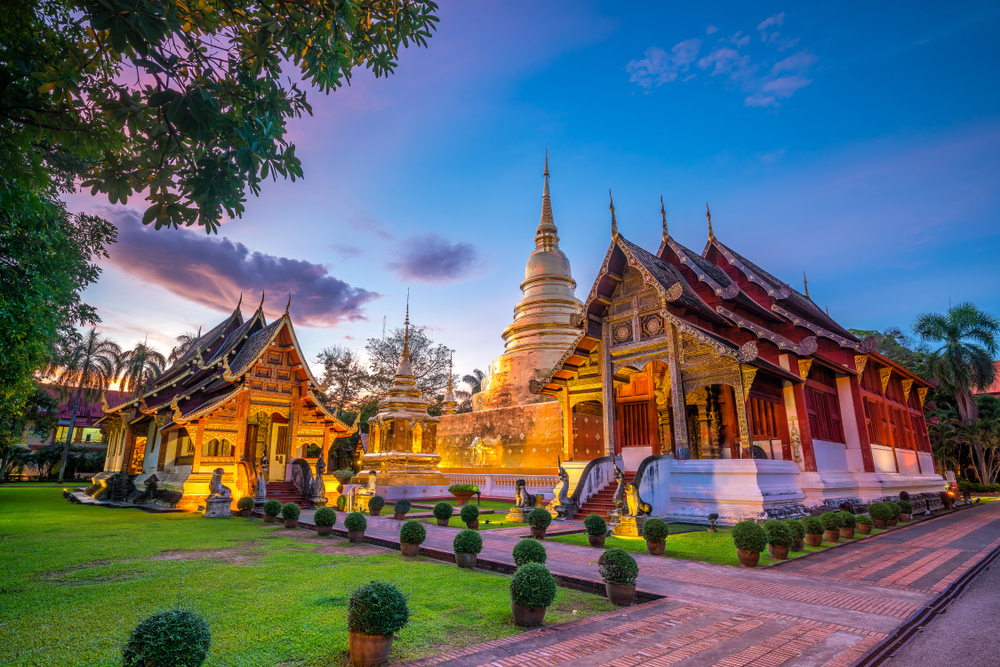
Chiang Mai, Thailand’s second-largest city in terms of urban population, is a bastion of northern Thai culture. It was formerly the capital of the Lanna Kingdom, which existed in the northern Thailand region from the 13th to the 18th centuries, and the city was designed with the help of religious and astrological concepts.
Today, although Chiang Mai is a modern city known for trendy cafes on Nimmanhaemin Road and its numerous night markets, its old city has also been well-preserved.
The old city is surrounded by a moat and the remnants of the ancient city walls with five original gates, which each served a specific function in the past, such as trade and defence.
It is home to dozens of temples, including Wat Phra Singh, which comprises a large temple complex housing a famous Buddha statue, and Wat Chedi Luang, a 14th-century temple with a huge stupa now in ruins. The many temples attest to the importance of spirituality to the city’s identity.
It is also worth venturing out to Doi Suthep, which comprises a national park as well as the Wat Phra That Doi Suthep, Chiang Mai’s most iconic temple. The trip is well worth the time, not least for the elaborate temple complex and the stunning views over the city.
George Town, Malaysia
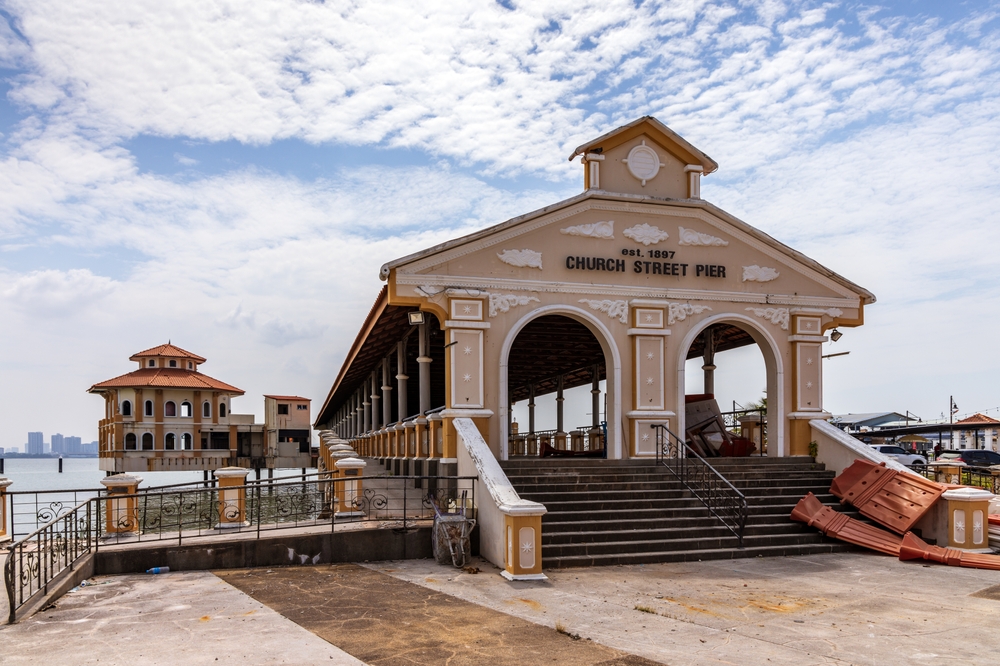
Maybe it’s the city’s heady mix of Chinese, Malay and Indian culture, as well as the traces of British colonial rule left on its architecture. Or it could be the cuisine, which is almost identical to Singapore’s, save for subtle differences in ingredients and nomenclature.
Whatever the reason, George Town in Penang, which is a UNESCO World Heritage site, can feel deeply nostalgic to travellers with cultural roots in Singapore.
George Town is Malaysia’s second-largest city and Penang’s capital, and was the first Southeast Asian settlement founded to serve the British East India Company. Penang briefly served as the capital of the Straits Settlements, before being replaced by Singapore in 1832.
For a quick introduction to the city’s past as a colonial town, one of the most iconic roads in George Town is Armenian Street, home to traditional shophouses, Chinese clan associations and the Penang Islamic Museum, and is also known today for its street art. Little India is also a popular destination for its lively atmosphere and abundance of authentic Indian eateries.
Yogyakarta, Indonesia
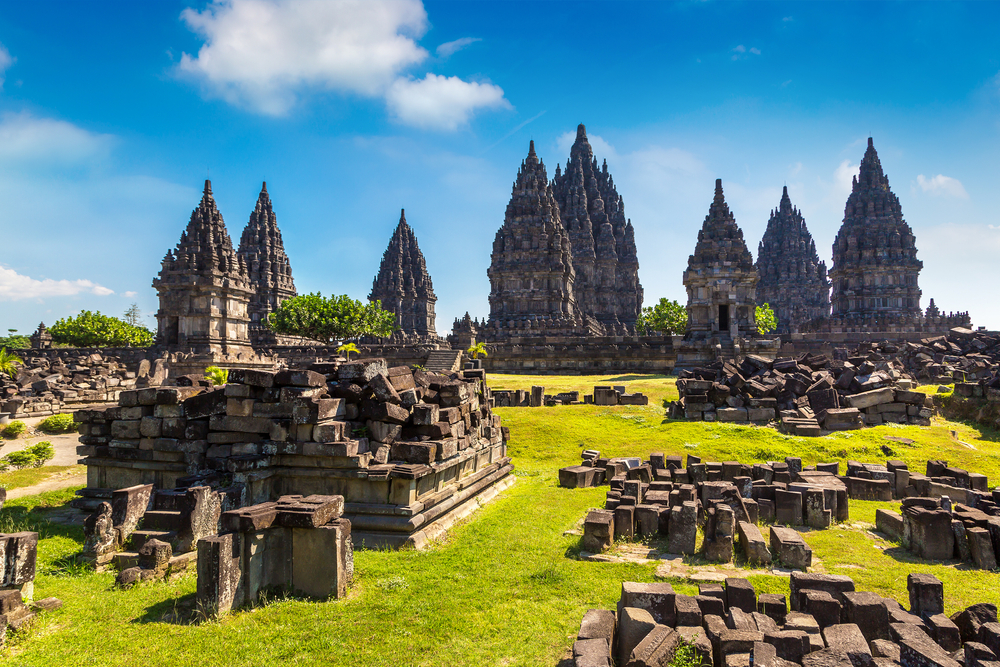
Yogyakarta is known as the gateway to the majestic Borobudur and Prambanan temples, and has also gained a reputation for being one of Indonesia’s most culturally rich cities.
The historic neighbourhood of Kotagede, located in the southeastern part of Yogyakarta, has retained much of its heritage, and boasts a charming mix of ancient monuments and colonial-era architecture.
Kotagede sits on the site of the Mataram Sultanate’s first capital, which was founded in the 16th century. Today, atmospheric ruins from that period of its history can still be seen, and include the ancient palace and ramparts, as well as the royal cemetery.
Dutch colonisation also left visible traces in Kotagede, and can be observed in the unique design of kalang houses, which can still be seen today in the area. The kalang people’s enclave was formerly located in Kotagede, and they built ornate houses that combined Javanese and Western architectural features.
Modern-day Kotagede is a silversmithing hub and also home to a wealth of landmarks such as the Kotagede Traditional Market, where you can buy a range of food products, and the Kotagede Mosque, also known as the Mataram Mosque, established in 1575 and built in a Javanese style.
Battambang, Cambodia
Most first-time visitors to Cambodia make a beeline for Angkor and the capital, Phnom Penh, but Battambang, Cambodia’s second-largest city in terms of population, is often overlooked.
Founded in the 11th century, Battambang was later colonised by the French, who extracted the city from Siamese rule and reunited it with Cambodia under the umbrella of French Indochina.
Today, Battambang’s colonial quarter is the heart of the old city and is replete with French colonial buildings in fairly good condition, as well as some Thai-style architectural features, a throwback to the days when the city was a Siamese province.
The European-style Governor’s Residence, one of the most prominent buildings in town, is often mistakenly thought to be French, but was actually designed by an Italian architect in the French style and commissioned by a Thai king.
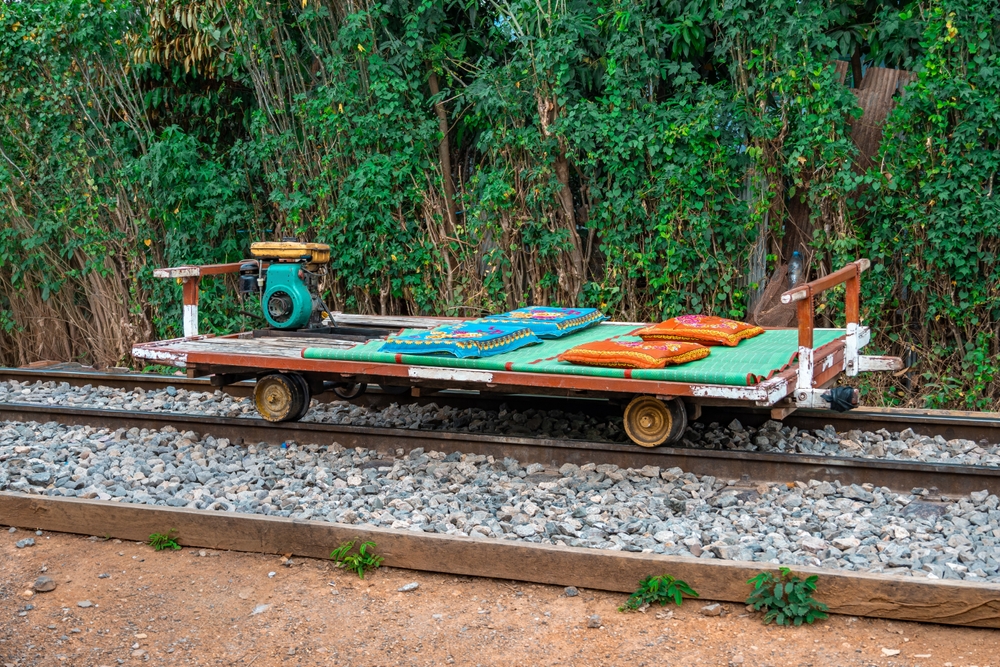
The underrated city is also home to the legendary bamboo railway, a simple trolley system that was originally used for the transport of passengers and goods in place of a train, and ran on abandoned railway tracks.
Nowadays, the bamboo train is mostly used to transport tourists, and the original vehicle is no longer being used, but instead a version built specially for tourists. Still, it offers a unique insight into what was once a way of life.


